Death
Death
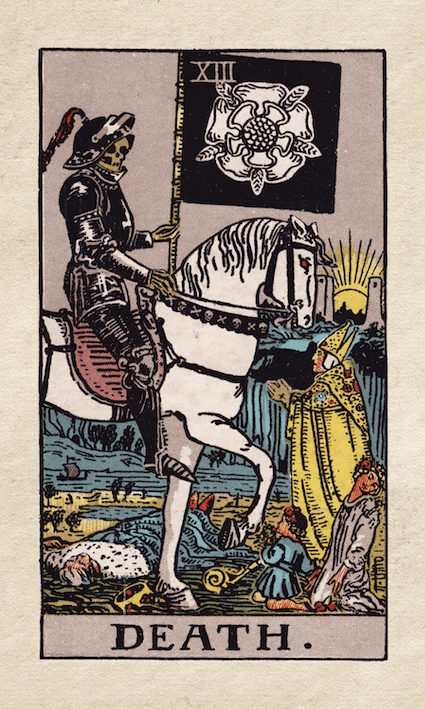
The Death card is one of the most misunderstood and feared cards, but it carries profound and transformative meanings. It is the thirteenth card in the Major Arcana, and contrary to what its name suggests, it rarely represents literal death. Instead, it signifies an essential process of change, letting go, and rebirth.
This card invites individuals to embrace change, surrender to the natural flow of life, and undergo a profound inner transformation. By embracing the transformative power of Death, individuals can navigate life’s transitions with grace, explore the depths of their being, and emerge stronger and more authentic on their journey of self-discovery.
The Death card carries a message of profound change and transformation. It reminds that all things must pass, and by embracing change and releasing what no longer serves us, we can undergo a profound rebirth and growth in our lives. It urges us to accept the impermanence of life and find strength in the face of transitions and new beginnings.
Transformation: The primary attribute of the Death card is transformation. It represents the natural cycles of life, death, and rebirth. This card indicates the end of a significant phase in life and the beginning of something new and different.
Release and letting go: The Death card encourages the seeker to release old patterns, habits, or beliefs that no longer serve them. It symbolizes the need to embrace change and leave behind what is outdated to make space for growth and renewal.
Rebirth and renewal: Just as the leaves fall from the trees during autumn, the Death card foretells a time of renewal and regeneration. It represents the potential for a fresh start, new opportunities, and a chance to begin again with a deeper understanding of life.
Symbol of cycles: The card embodies the cyclical nature of existence. It reminds us that everything in life has its time and that even the most challenging situations will eventually pass.
Symbolism
We are using the Rider–Waite Tarot for this analysis. This deck is the most used world-wide and is highly recommended for those starting out with Tarot.
Skeleton: The central figure on the card is often a skeleton, representing the universal and timeless nature of death. It symbolizes the impermanence of the physical body and the eternal aspect of the soul.
Armor: The skeleton is usually depicted wearing armor, signifying that death is impartial and inevitable, affecting all, regardless of status or rank.
Reaping: In some illustrations, the skeleton may be holding a scythe, representing the harvesting of crops and the idea that everything has its season.
Sun rising or setting: The background of the card may depict the sun either rising or setting, symbolizing the continuity of life despite the transformative process at hand. It reminds us that every ending is a new beginning.
River or boat: A river or a boat in the background can represent the crossing from one phase of life to another. This symbolizes the journey from the known to the unknown, often requiring courage and acceptance.
White rose: In certain Tarot decks, a white rose may be present, signifying purity, transcendence, and the promise of new beginnings after death.