The Hanged Man
The Hanged Man
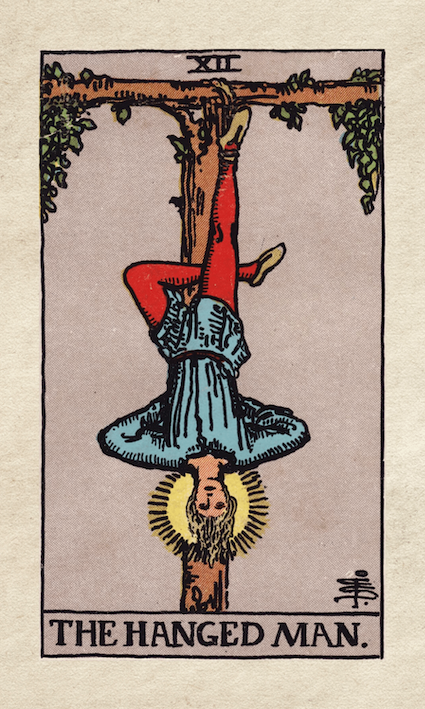
The Hanged Man encourages surrender, introspection, and a willingness to embrace the unknown. It reminds individuals that sometimes letting go and changing perspectives can lead to greater spiritual growth and understanding.
This card embodies self-reflection and inner transformation. It signifies the need to pause, introspect, and reevaluate one’s life and circumstances.
The Hanged Man invites us to see things from a different perspective and explore the depths of our own psyche for personal growth and transformation. Have we been struggling to keep things the same? Have we been resistant to change? You may ask yourself, how did I get here?
The Hanged Man represents suspension and surrender. It symbolizes the act of letting go, releasing control, and embracing a state of surrender to the flow of life. This card signifies the willingness to relinquish old patterns, beliefs, and attachments in order to gain new perspectives and insights.
Sacrifice and Letting Go: This card emphasizes the idea of sacrifice and letting go. It signifies the willingness to release attachments, desires, or old ways of being that no longer serve one’s growth. The Hanged Man suggests that through sacrifice, individuals can attain higher levels of consciousness and spiritual evolution.
Perspective and New Insights: The Hanged Man represents gaining new perspectives and insights. It symbolizes a shift in consciousness that allows individuals to see situations from a fresh viewpoint. This card encourages individuals to embrace a different way of looking at things, opening themselves to unconventional ideas and possibilities.
Non-Resistance and Acceptance: This card reflects the concept of non-resistance and acceptance. It symbolizes the ability to embrace what is, without resistance or judgment. The Hanged Man invites individuals to surrender to the present moment and find peace in accepting things as they are.
Suspension of Judgment: This card embodies the suspension of judgment. It signifies the invitation to suspend preconceived notions, biases, and judgments about oneself and others. The Hanged Man encourages individuals to approach situations with open-mindedness and a willingness to see beyond surface appearances.
Symbolism
We are using the Rider–Waite Tarot for this analysis. This deck is the most used world-wide and is highly recommended for those starting out with Tarot.
The Hanging Position: The Hanged Man is usually depicted hanging upside down, forming an inverted triangle with his legs and arms. This posture symbolizes a reversal of the ordinary, a willingness to see the world differently, and a break from the norm.
Nimbus or Halo: Often, the Hanged Man is shown with a halo or nimbus around his head, signifying spiritual enlightenment and divine wisdom gained through surrender and sacrifice.
Tree: The Hanged Man is often suspended from a tree, with one foot tied to its branches. The tree represents the world axis or the connection between the earthly and spiritual realms. It also symbolizes growth and life cycles, emphasizing the transformative nature of the card.
Serenity: Despite the apparent discomfort of the hanging position, the Hanged Man is usually depicted with a calm and serene expression, showing his acceptance and peace with his circumstances.
Blue and White Colors: The card often features a dominant blue and white color scheme, representing the spiritual and intellectual aspects of the Hanged Man’s journey.