The Devil
The Devil
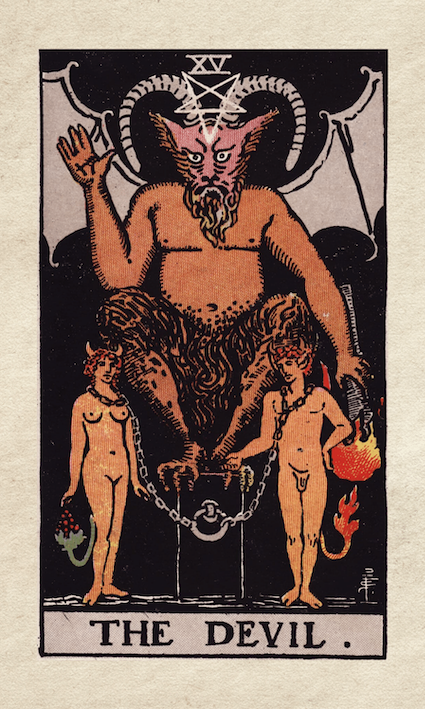
The Devil represents our shadow selves, self-imposed bondage, and the need for liberation. It emphasizes the importance of confronting and integrating the unconscious aspects of the self, breaking free from unhealthy attachments, and taking responsibility for one’s own choices.
Like most, we fancy ourselves as the hero of our journey, but at the same time, our choices, our decisions, and our reactions, can have a negative impact on our lives, or the lives of others, when those decisions are made out of fear, addiction, and shame.
This card encourages individuals resist being controlled by their feelings, to look at the areas of our life that are out of harmony, that we are stuck in, and to honestly, brutally ask why. When our life isn’t working well, when we feel oppressed, burnt out, unsatisfied and victimized, there is always a reason, and there is always an exit. The difficulty is what does it cost to exit a situation, that is like a wound that won’t, can’t heal.
The Devil card serves as a reminder to be cautious of the negative influences that can lead one astray, urging us to strive for greater self-awareness, to break free from harmful patterns, addictions and self-sabotage. It asks us to look honestly at our desires, motivations and the recognition of one’s own power to break the chains of temptation and self-destructive behaviors.
Self-imposed limitations: The Devil asks us to question our desires, motivations, to confront illusions. By taking a long hard look at the aspects of our lives that continually plague us, that feel as if we are always pushing uphill, examining why and how we continue to repeat negative relationships, we can be eventually free from negative cycles, and work towards living life without creating a lot of drama or getting sucked into other people’s drama.
Temptation: The Devil card symbolizes the allure of material desires, addictions, and unhealthy attachments. It warns of the temptation to give in to vices or negative impulses that can lead one astray. It symbolizes the allure of materialism, hedonism, or unhealthy pleasures that may distract individuals from their true path.
Bondage: The figures depicted on the card often show a man and woman chained to the Devil’s pedestal. This symbolizes the feeling of being trapped or enslaved by one’s own fears, obsessions, or circumstances.
Materialism: It signifies excessive focus on material possessions and the dangers of becoming too attached to wealth or superficial gains.
Illusions and Deception: The Devil embodies illusions and deception. It symbolizes the distortion of truth and the seductive nature of illusions. This card encourages individuals to question appearances, confront self-deception, and seek clarity beyond superficialities.
Symbolism
We are using the Rider–Waite Tarot for this analysis. This deck is the most used world-wide and is highly recommended for those starting out with Tarot.
The Devil: The central figure on the card is often portrayed as a horned, winged creature resembling the traditional concept of the Devil in Western culture. This figure represents the darker energies and negative forces that can influence human behavior.
Chained Figures: There is usually a man and a woman, often nude, chained to the Devil’s pedestal. This represents the state of bondage and how the pursuit of material desires can lead to a loss of freedom. The card can also represent a willful ignorance as the chains around the figures’ necks are loose, indicating that they could free themselves if they only realized they have the power to do so, or choose to.
Pedestal: The Devil stands on a pedestal, elevated above the chained figures. This symbolizes the false sense of power that materialism and temptation can give, luring individuals into submission.
Flames: In some versions of the card, there are flames surrounding the figures, suggesting the burning intensity of desire and the potential destructive nature of unchecked impulses.
Inverted Pentagram: The Devil often holds an inverted pentagram, which is a symbol associated with dark magic and occult practices. It represents a distortion of spiritual energy and a focus on material concerns.
Horns and Wings: The Devil’s horns and wings represent the demonic or evil aspects that can emerge when one becomes enslaved by their own desires and attachments.