The Hierophant
The Hierophant
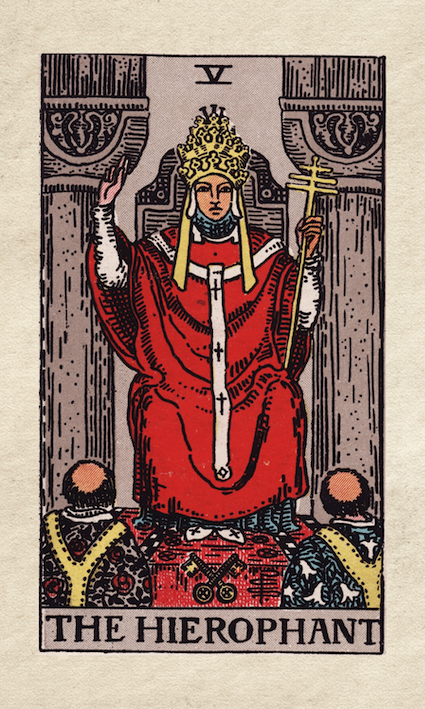
The Hierophant represents authority and the power of tradition. It symbolizes established systems, beliefs, and rituals. It signifies conformity, rituals, and social structures. Are there traditions or memories from your own past you may want to revisit or recreate? Do you have skills to teach others?
This card challenges us to examine our own reaction to authority, and individuals in position of power and control. It asks us to be informed about the overall health and well-being of people in our communities.
The Hierophant encourages individuals to be open to thoughtfully consider the benefits or harm of laws or rules that govern. It also conveys the benefits of joining others in the community to share in rituals and traditions.
The Hierophant portrays a leader or authority figure who guides seekers on their individual and group journey. It encourages embracing traditions, rituals, and rules, and seeking guidance and community to attain deeper connections both internally and externally. Be curious about your reaction to this card.
Teacher and Mentor: This card embodies the archetype of the teacher and mentor. It represents the figure who imparts knowledge, wisdom, and guidance to others. The Hierophant signifies the role of a trusted advisor, helping individuals navigate their spiritual or personal paths. It may suggest that you have skills or experience to teach others.
Conformity and Social Structures: This card reflects the idea of conformity and adherence to social structures and norms. It symbolizes the need for individuals to find their place within the larger society and to abide by its rules and expectations. The Hierophant invites individuals to consider the benefits and limitations of conformity in their own lives. At the same time, this card can indicate a rigid personality that clings to out-dated systems and beliefs.
Rituals and Ceremonies: This card emphasizes the significance of rituals and ceremonies in spiritual and personal growth. It signifies the power of symbolic acts and formalized practices to connect individuals with the sacred and evoke a sense of meaning and transcendence. The Hierophant invites individuals to engage in rituals that align with their values and beliefs.
Seeker of Inner Wisdom: The Hierophant represents the seeker of inner wisdom. It signifies the individual’s quest for deeper understanding, spiritual insight, and personal transformation. This card invites individuals to explore their inner selves, question their beliefs, and embark on a journey of self-discovery. What are traditions that bring fond memories? Can those be recreated in your current life? Are there events and holidays that could be new traditions that reflect who you are now?
Symbolism
We are using the Rider–Waite Tarot for this analysis. This deck is the most used world-wide and is highly recommended for those starting out with Tarot.
Throne: The Hierophant is seated on a throne, symbolizing their position of authority and power. It represents the ability to govern and make decisions, but also dispense consequences for rules broken or ignored. Thrones often are symbols of structure and ridgitity.
The Hierophant: The central figure on the card is often depicted as a religious or spiritual authority figure, such as a pope, priest, or guru. This figure represents the conduit between the earthly realm and the divine, holding the keys to higher knowledge.
Triple Crown: The Hierophant is sometimes depicted wearing a triple crown, which symbolizes his authority over the three realms of heaven, earth, and the underworld. It signifies the interconnectedness of these realms in the pursuit of spiritual growth.
Hand Gestures: The Hierophant typically makes hand gestures, such as the blessing or benediction, indicating his role as a leader who bestows blessings and spiritual grace upon his followers.
Two Attendants: The Hierophant is often flanked by two attendants, representing the dual nature of the material and spiritual worlds. They symbolize the balance between the outer, mundane aspects of life and the inner, spiritual aspects that the Hierophant helps unite.
Crossed Keys: The crossed keys held by the Hierophant represent the keys to hidden knowledge and spiritual mysteries. They indicate the access to esoteric teachings and the potential for unlocking higher levels of consciousness.
Pillars: The Hierophant is often depicted between two pillars, similar to the High Priestess card. These pillars symbolize the duality of existence, with the Hierophant acting as a bridge between the seen and the unseen, the known and the unknown.