Five of Swords
Five of Swords
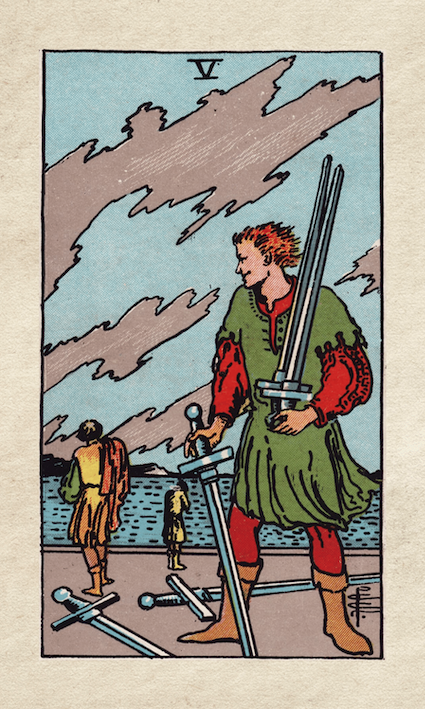
The Five of Swords is a complex and often challenging card that represents conflict, power struggles, and disharmony among individuals. While the main character appears to have won this fight, at what price?
The challenge is to be able to discern if a cause is worth a fight. Is winning at all costs self-defeating in the end? Is the fight worth winning? Sometimes it is indeed necessary to defend yourself, but most of the time doing nothing is probably best. Were we wronged, yes! Do we have to react, depends!
The Ace of Cups represents the beginning of a new emotional and creative journey, symbolizing the potential for deep fulfillment and the awakening of the individual’s inner world.
Conflict and Turmoil: The Five of Swords symbolizes interpersonal conflicts, inner turmoil, and power dynamics. It signifies the presence of tension, disagreements, or a sense of betrayal within relationships.
Reactivity/Self-Sabotage: It represents an opportunity to explore one’s own patterns of behavior, projections, and the underlying psychological dynamics that contribute to conflicts. We have the choice in every conflict as to whether we will react or not. A good question to ask is what will be gained by being “right” and what will be gained by not reacting.
Ego and Power Games: The Five of Swords highlights the ego’s role in power struggles and manipulative behaviors. It signifies the potential for unhealthy competition, manipulation, or a desire to win at all costs.
Release and Letting Go: The Five of Swords calls for releasing attachments to situations or relationships that no longer serve one’s highest good. It signifies the necessity of cutting ties with toxic influences or negative dynamics to move forward.
Victorious Manipulation: This card may symbolize manipulative tactics, deceit, or the pursuit of personal gain without considering the well-being of others. It highlights the potential for deceitful actions and the consequences they may have.
Symbolism
We are using the Rider–Waite Tarot for this analysis. This deck is the most used world-wide and is highly recommended for those starting out with Tarot.
Conflict and Defeat: The central theme of the card is conflict and its aftermath. It symbolizes a situation where there has been a clash of ideas, interests, or egos, leading to feelings of defeat and frustration among the parties involved.
Swords: The suit of Swords in Tarot represents intellect, communication, and the mind. The presence of swords in this card indicates that the conflict is often rooted in verbal disagreements, mental struggles, or harsh words.
Figures: The card usually depicts several figures, often one or more individuals standing triumphantly, while others walk away defeated. The victorious figure may be seen as having manipulated the situation or taken advantage of others to achieve their goals.
Body Language: Pay attention to the body language of the characters in the card. The defeated individuals may show signs of sadness, anger, or shame, while the victor may exhibit arrogance or a lack of empathy.
Sky and Clouds: The sky and cloud imagery can convey the emotional atmosphere of the scene. Dark or stormy clouds may symbolize the intensity of the conflict and the feelings of despair, while a clearing sky might represent hope for resolution.
Abandoned Swords: Often, some swords are left abandoned on the ground, suggesting that the conflict has already taken a toll on the participants, and some may have chosen to walk away rather than continue the fight.